Category: Politics

  • Time for Some Drama From Obama

    Let’s get it out there.

    Last night was ugly. There are a lot of reasons to be disappointed. I had friends lose their congressional seats, and more friends lose their congressional jobs.

    Waking up a little late today, (I got home at 3AM last night, having driven home from Bucks County, PA) I just tuned in to watch the President’s post-election press conference, wondering what he would say.

    Would he dig in his heels with a Bush-like “Bring it on?”
    Would he come to the table full of contrition?
    Would he outline a strategy to keep his agenda moving forward?

    Unfortunately, none of the above.

    In the head of the 2008 presidential campaign, Barack Obama’s ability to maintain his cool at all time earned him the nickname “No Drama Obama.” I’m glad he can keep his head on straight when faced with critical decisions about national security, terrorism, etc. I feel good knowing that he examines all sides of tough economic questions before taking action.

    But last night was about politics. It was about his agenda and, in many cases, it was personal.

    His base is disappointed, afraid and demoralized, but there was hope. The President was going to speak at 1:00. He was going to answer questions. He was going to, we hoped, signal a direction for the next two years.

    I wanted to hear him say “stay and fight.”

    I wanted to hear him say, “I will veto any attempt to repeal the health care bill.”

    I wanted to hear him say, “There’s more to governing than just saying no.”

    I wanted to hear him call out the Republican leadership for announcing that they will refuse to compromise. When the President was asked about the compromises he would need to make in the 112th Congress, the answer I wanted to hear was, “I have been willing to compromise, and HAVE compromised. And every step of the way, the GOP has said ‘no.’ When it comes to matters of principle, I. Will. Not. Compromise.”

    But we got “No Drama Obama.”

    The president is obviously disappointed in last night’s results. He did say he “feels bad” that so many of his allies (even some who weren’t such great allies) lost. I guess that’s a start.

    Democrats, we have approximately 9 hours left to lick our wounds. By tomorrow, we have to pick ourselves up, dust ourselves off, and get back on the field.

    The Republican Party of the 112th Congress will be the most extreme bunch of folks to ever take office, but they’re also going to have one of the best-organized propaganda machines ever devised. The Limbaugh/Beck network has incredible reach and doesn’t care about truthiness. Watch what happens in January, when the class is sworn in. It’s going to be festival of right-wing noise aimed at defining not only the new members, but the right’s next targets.

    (It turns out, they didn’t even wait that long:This is the list of Republicans the Tea Party are targeting. Be sure to read the comments).

    Democrats in the 111th Congress let the right define us. We let them peg trillions of dollars of “wasteful” spending on us. We let them saddle us with a “government takeover” or healthcare (sorry—“OBAMACARE”) and an “assault on the constitution.”

    We need to change the definitions. We need to do some defining of our own. We need to play offense.

    When let opponents talk about “Obamacare,” rather than talking about the end of insurance company abuses, we’ve already lost.

    When we let opponents talk about a “failed stimulus” rather than talking about middle class tax cuts, cops who are still on the beat, bridges that are being built, and teachers who are still in classrooms, we’ve already lost.

    When we let opponents talk about TARP as if money was flushed down the toilet without mentioning that 90% of the money has been paid back with interest—and that the program was initiated by President Bush, we’ve already lost.

    In politics, whenever you’re playing defense, you’ve already been defined. And you’ve been defined by your opponent, you’ve already lost.

    Well, last night reminded me that losing sucks. A lot. That’s why I was disappointed in the President’s press conference today. He was almost too willing to accept defeat. Having been punched in the gut by the GOP, he sounded like he was just glad that Republicans didn’t break their thumbs in the assault. I was hoping to see some fire in his eyes, some fight in his belly, some commitment to redouble his efforts and a recognition that his White House—which has compiled a stunning list of accomplishments in just two years—has totally failed to present concrete examples of that progress to the American electorate.

    Instead, I saw a calm, cool and collected president giving answers that were too long and too abstract. And I worried that, somewhere in Washington, the Republicans were gathered in a room, getting ready to define the next two years before we have a chance to regroup.
  • R.I.P. Jack Murtha

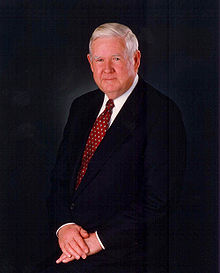
    Rep. Jack Murtha (1932-209)

    A quick note about Jack Murtha, who passed away today in a Virginia hospital at the age of 77.

    He was the first Vietnam Veteran elected to Congress–he had left the Marines in 1955 but returned to active duty, received a bronze star and two purple hearts in Vietnam. After being elected to Congress, he remained part of a Marine Reserve Unit until 1990.

    Because of his service, Mr. Murtha was a fierce advocate for veterans and active duty service members while in Congress. He rose through the ranks to chair the Defense Subcommittee of the House Appropriations Committee–overseeing our military spending and budget.

    But this is what everybody knows about Jack Murtha.

    Working in Pennsylvania politics for several years, I had the opportunity to meet Rep. Murtha on several occasions. Much will be written about him in the coming hours and days, but there are things I will remember from those times away from the bright lights.

    Murtha was intimidating–a hulking figure who loomed as large in person as he did by reputation. He was a commanding presence in any room, which served him well in Congress. As the Dean of Pennsylvania’s Congressional delegation, Murtha would hold court in the “Pennsylvania Corner” on the house floor. All of the state’s Congressional members would check in with him before going to vote. Still, it always seemed to me that he preferred the behind-the-scenes work. While other Members grandstand, Mr. Murtha worked quietly behind the scenes, building alliances and getting things done.

    Of course, that all changed in 2006, when Jack Murtha took the spotlight to become a vocal critic of the Iraq war. To me, it was his reluctance to take the spotlight that made his words more impactful. At the time, I was working with now-Representative Patrick Murphy. Murphy was running to become the first Iraq War Veteran elected to Congress, and I think Mr. Murtha took a shine to Patrick because of their shared experiences.

    I will never forget the morning that Patrick and I spent in Mr. Murtha’s office, along with another Marine-turned-Pennsylvania-Congressman, Bob Brady.

    The four of us sat around a table in Mr. Murtha’s office, and at first, nobody spoke. Mr. Murtha was reading his morning clips, which that morning included a map showing the current number of Iraq war fatalities in every state. Pennsylvania led the way.

    What struck me that morning was how soft-spoken this enormous man was–this marine, this appropriations cardinal, this power broker–and also how much pain was in his voice when he spoke about the war and its toll. This was when first saw Mr. Murtha’s passion, and it was an incredibly humanizing moment.

    For the next hour, I don’t remember anybody speaking other than Mr. Murtha, except when he specifically addressed one of us with a question. He had brought us in so that he could give his advice. He wanted to share his experiences.

    As the only non-veteran in the room, and the only one there who had never run for office, it was an amazing thing to watch.

    As the senior officer, as well as the senior Member of Congress in the room, the respect and attention that he commanded were palpable, and I’ve not seen anything like it since.

    At the end of the discussion, after we’d spoken about Iraq, about Pennsylvania, and about Congress, Mr. Murtha offered his last piece of advice:

    “You have to have an issue–a cause,” he said. “For example, mine has been diabetes.”

    I did a double take because, right there, Jack Murtha had at the same time thrown me for a loop and said something completely obvious without saying it at all.

    I knew Mr. Murtha as a military advocate and a powerbroker. I had never thought of him as a Representative looking out for the people of his district. Of course, this is why he was there in the first place…but it had never crossed my mind.

    Mr. Murtha explained that became involved with diabetes because of high rates among his constituents. He was able to use his position as an appropriations subcommittee chair to ensure that research dollars went to addressing the problem. And despite his national importance, his chairmanship, his newfound celebrity status in the progressive community because of his opposition to the war, Jack Murtha was telling us about the importance of being responsible to the people who send you to Congress every time there’s an election.

    So, when you see the obituaries and remembrances in the next few days, when you read the histories, remember this: Jack Murtha was genuine. He was passionate, cerebral, and fierce. And he never forgot why he was there.

    Rest in Peace, Jack.

  • Doris Kearns Goodwin Endorses My Political Strategy

    Last night, on The Daily Show, noted presidential historian Doris Kearns Goodwin, noted presidential historian endorsed my position on the filibuster. At around 3:30 of this clip she announces:

    “Let them filibuster. Do you know how great they’re going to look, these Republicans, trying not to go to the bathroom?”

    Of course, I think I used a wittier phrase, but she’s got a lot more gravitas!

    The Daily Show With Jon Stewart Mon – Thurs 11p / 10c
    Doris Kearns Goodwin
    www.thedailyshow.com
    Daily Show
    Full Episodes
    Political Humor Health Care Crisis
  • Make Them Read the Phone Book

    Having just watched the State of the Union, I want to get something off my chest. There are some Senators who think the best thing to do right now to unclog the Senate’s arteries is to end the filibuster.

    I disagree.

    The best way to shake things loose is to actually enforce the filibuster.

    Democrats may have lost their alleged “filibuster-proof majority,” (though, functionally, I don’t think they ever really had one), but we still have an 18-seat majority in the Senate, and it’s time to use it.

    All that’s standing between this country and a lot of good policy is the threat of a filibuster. Not an actual filibuster, the threat of a filibuster.

    I just got back from Massachusetts, where Scott Brown won a Senate seat on a promise to be the “41st Vote” to block the President’s agenda–and it was easy for him to to make that promise, because he doesn’t think he’ll ever asked to actually cast that vote!

    Procedural filibusters have become the norm, and as a result,  it now takes 60 votes in the Senate to do anything more controversial than renaming a Post Office. Frankly, sometimes it takes 60 to even to do that. It’s not the way things are supposed to be.

    The Senate Majority Leader can require an actual filibuster. For the sake of accountability, he needs to do it.

    Let’s see what the Republicans’ resolve really is.

    Let’s see what happens when they’re forced to hold the floor, Jimmy Stewart-style, in opposition to bill after bill after bill.

    Let’s see how Scott Brown’s constituents react when he’s standing in the well of the Senate, on their dime, reading the Worcester yellow pages (do they still print yellow pages?) instead of doing what they sent him to Washington to do–vote on legislation.

    Let’s see if Republican leaders have the stomach to read the bible cover to cover while their constituents sit at home, waiting for the job market to pick up.

    Let’s see how the American public reacts when they turn on their teevees and see who is really to blame for the gridlock that’s keeping America from moving forward.

    And let’s see how long they continue to obstruct after constituents get tired of seeing their elected representatives take vote after vote after vote in favor of more readings from the book of Verizon.

    Right now, Republicans are getting off easy. They threaten to block progress, then blame the Democrats for not progressing.

    It’s time to call their bluff.

    It’s time to make them read the phone book.

  • A Peek Inside the Obama Administration’s Education Policy

    So, I had an interesting opportunity this morning.

    In one of those only-in-Washington salon-type meetings, I was at a breakfast with a senior official who works on the Obama administration’s education policy. Unlike me, most of the attendees work in the education community. There were folks with advocacy groups, teacher groups, non-profits and a couple of universities. And then there was me.

    Maybe a lot of what was discussed was standard fare for those folks, but as somebody who’s never really been exposed to education policy before, it was a real eye-opener. And while Health Care Reform has obviously consumed a lot of the oxygen in our very own District of Columbia, it was really encouraging to hear that this Administration still has their eye on the ball on education and a whole range of other topics.

    One constant theme that was addressed was the achievement gap—the difference in educational achievement that exists between poor/underserved school districts and middle class or affluent districts. Despite No Child Left Behind, despite all that’s been done to address this gap, the gap is not narrowing. In fact, it’s widening, and more and more children are being left behind. (more…)